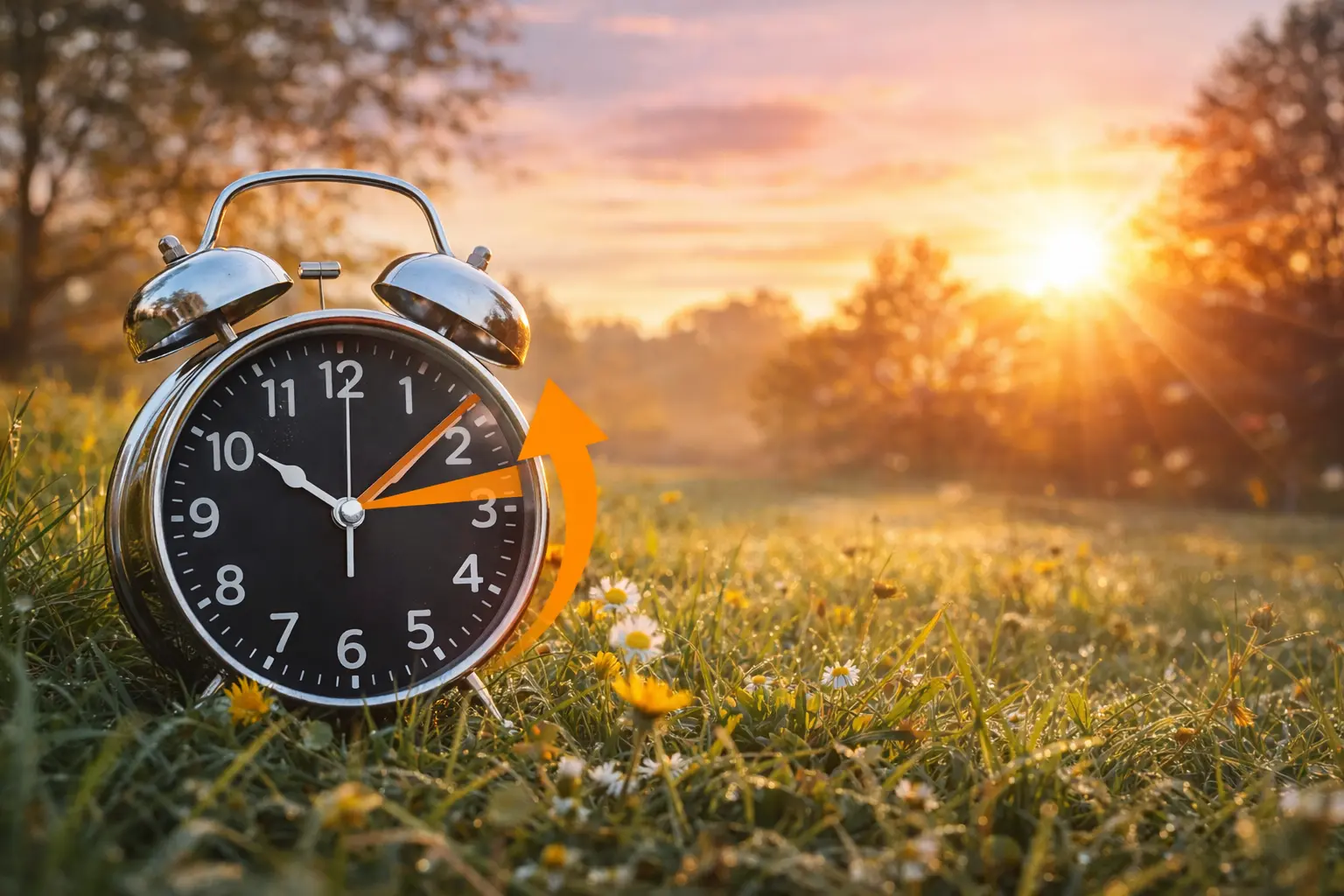
As spring approaches and days grow longer, many people across North America prepare for the annual Daylight Saving Time (DST) adjustment. This seasonal change requires most residents to move their clocks forward by one hour, bringing brighter evenings but slightly shorter nights.
In 2026, the time change once again affects millions of people across the United States and Canada, while other regions such as the United Kingdom and Europe follow their own schedules later in the month. Understanding the exact dates and regional differences can help you adjust smoothly and avoid disruptions to your daily routine.
This guide explains when DST begins, which areas do not observe it, and how the change impacts schedules, travel, and daily life.
When Daylight Saving Time Begins in the U.S. and Canada
In most parts of the United States and Canada, Daylight Saving Time begins on Sunday, March 8, 2026.
At 2:00 a.m. local time, clocks will move forward one hour. This means the time will jump directly from 1:59 a.m. to 3:00 a.m., effectively removing one hour from the night.
DST will remain in effect throughout the warmer months and will end later in the year.
Key dates for North America
-
Start date: Sunday, March 8, 2026
-
Time of change: 2:00 a.m. local time
-
Action: Move clocks forward by one hour
-
End date: Sunday, November 1, 2026 (clocks move back)
Most digital devices such as smartphones and computers update automatically, but traditional clocks and appliances may need manual adjustment.
Places That Do Not Observe Daylight Saving Time
Although most of the United States and Canada follow Daylight Saving Time, several regions do not participate.
In the United States
-
Hawaii does not observe DST.
-
Most of Arizona also remains on standard time year-round.
An important exception is the Navajo Nation, which spans parts of Arizona, Utah, and New Mexico and continues to observe DST for consistency across its territory.
In Canada
Daylight Saving Time is widely observed, but certain communities choose not to follow it. These include some areas in:
-
British Columbia
-
Nunavut
-
Ontario
-
Quebec
-
Saskatchewan
British Columbia has even considered adopting permanent daylight saving time, which could eliminate future seasonal clock changes.
Because of these regional differences, travelers and businesses working across time zones should always verify local time rules.
Daylight Saving Time in the U.K. and Europe
The United Kingdom and most European countries follow a different DST schedule.
In 2026, clocks in the U.K. and much of Europe will move forward on Sunday, March 29.
The time change occurs at 1:00 UTC, introducing British Summer Time (BST) in the U.K. and summer time in most European countries.
DST in Europe continues until Sunday, October 25, 2026, when clocks move back again.
European DST schedule
-
Start: March 29, 2026
-
End: October 25, 2026
-
Time change: 1:00 UTC
However, not all countries participate. Iceland, Belarus, and Russia do not observe Daylight Saving Time.
Why Daylight Saving Time Exists
Daylight Saving Time was originally introduced to make better use of daylight during longer days.
By shifting one hour of daylight from the morning to the evening, DST aims to encourage outdoor activities, increase business hours in daylight, and potentially reduce energy consumption.
More than 70 countries worldwide currently use some form of daylight saving time.
Supporters argue that DST offers benefits such as:
-
more daylight for evening recreation
-
increased shopping and tourism activity
-
possible reductions in energy use
However, critics question whether the energy savings are still significant in modern societies with efficient lighting and climate control systems.
Ongoing Debate About Daylight Saving Time
The clock change has long been controversial.
Many people report feeling sleep disruption and fatigue after the spring transition, as the body’s internal clock struggles to adjust. Studies have also linked the shift to temporary increases in workplace accidents and reduced concentration.
In contrast, the fall change—when clocks move back—tends to be easier to handle because it provides an extra hour of sleep.
In the United States, there is growing interest in adopting permanent Daylight Saving Time. Nearly 20 states have proposed legislation supporting this change, though federal approval would be required for nationwide implementation.
Meteorological vs. Astronomical Spring
Daylight Saving Time usually begins around the start of spring, but there are two different ways to define the season.
Meteorological spring
Meteorologists divide the year into seasons based on the calendar for easier data comparison.
-
March 1 – May 31
Astronomical spring
Astronomical seasons are based on Earth’s position relative to the sun.
-
Begins: March 20, 2026 (vernal equinox)
-
Ends: June 21, 2026 (summer solstice)
Both systems are useful depending on the context, such as weather forecasting, gardening, or astronomical observation.
Tips for Adjusting to the Time Change
The one-hour time shift can disrupt sleep patterns, but a few simple steps can help ease the transition.
Helpful strategies include:
-
gradually going to bed earlier during the week before the change
-
getting morning sunlight to reset your internal clock
-
staying hydrated and maintaining a consistent sleep routine
-
adjusting clocks on Saturday night to avoid confusion
Families with children may find it helpful to shift bedtime routines slightly earlier for several days leading up to the change.
Businesses should also review meeting schedules, travel plans, and international communications to ensure everyone remains aligned across time zones.
Final Thoughts
Daylight Saving Time in 2026 will once again bring longer evenings and more daylight for outdoor activities across much of North America. Although losing an hour of sleep can feel challenging at first, most people adjust quickly.
By understanding the dates, regional differences, and purpose behind the time change, you can prepare in advance and minimize disruption.
As debates about permanent daylight saving time continue, one thing remains certain: the seasonal clock shift remains an important part of how many countries organize time each year.
Frequently Asked Questions
When does Daylight Saving Time start in 2026 in the U.S. and Canada?
It begins on Sunday, March 8, 2026, at 2:00 a.m., when clocks move forward one hour.
Which places in the U.S. do not observe DST?
Hawaii and most of Arizona do not follow Daylight Saving Time, although the Navajo Nation does.
When do clocks change in the U.K. and Europe?
Clocks move forward on March 29, 2026, and return to standard time on October 25, 2026.
Why was Daylight Saving Time created?
DST was designed to better align daily schedules with daylight hours, encouraging evening activity and potentially saving energy.
When does astronomical spring begin in 2026?
Astronomical spring starts on March 20, 2026, at the vernal equinox.