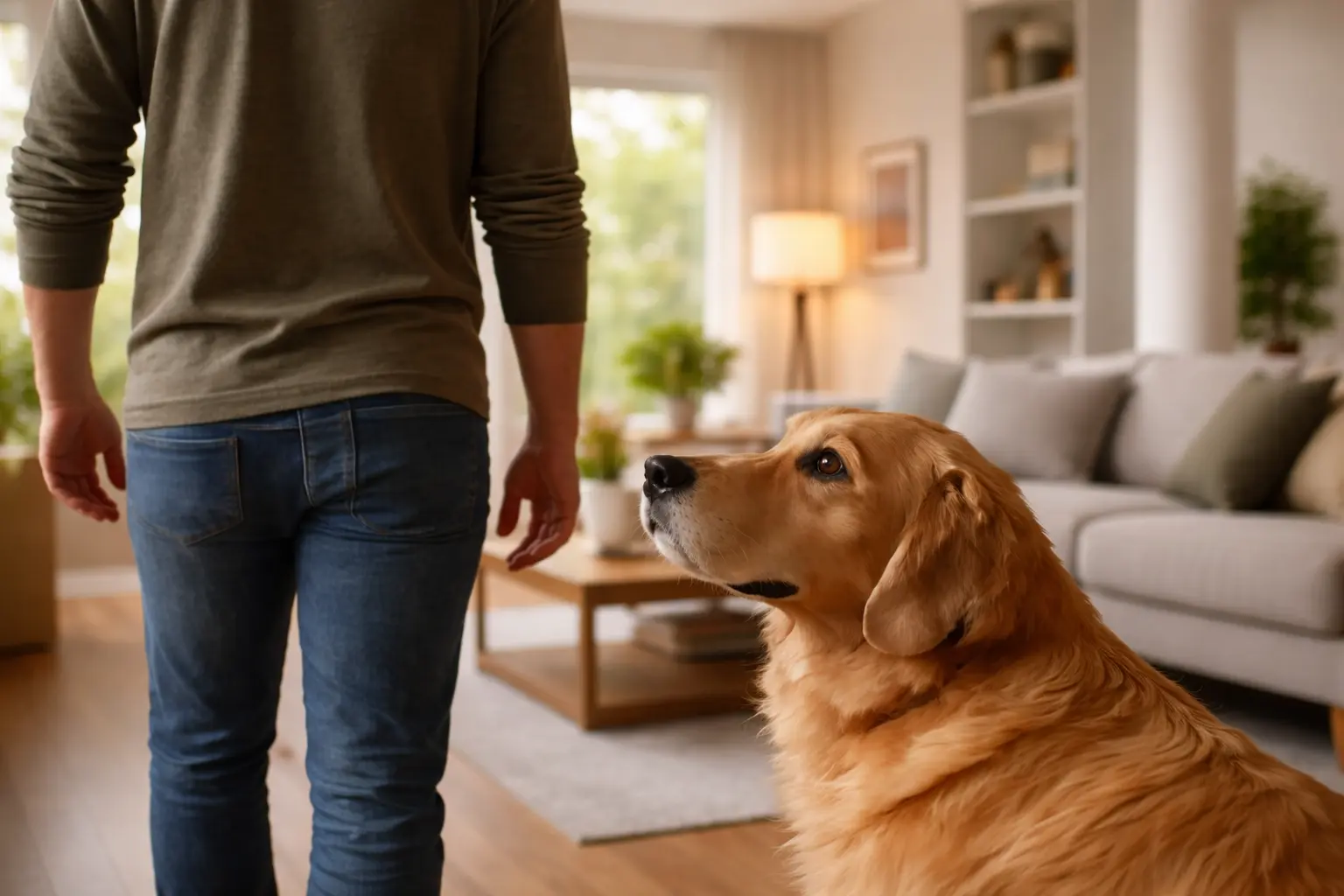
You usually hear them before you see them.
A soft tap of nails against the floor. A quiet shuffle in the hallway. You turn your head—and there they are again. Watching you. Waiting.
You move to the kitchen, and they move to the kitchen. You sit down, and suddenly they’re curled at your feet. You stand up, and they pop up instantly, as if they’ve been waiting for the signal.
For many dog owners, it can feel like living with a tiny shadow that just happens to have four legs and a wagging tail.
Sometimes it’s adorable. Sometimes it’s funny. And sometimes, if you’re honest, it can feel a little exhausting.
But your dog isn’t just being clingy. That constant following actually reveals a lot about their instincts, their emotions, and the special relationship they have with you.
The Quiet Communication Behind “Shadow Dogs”
Imagine a calm evening at home.
You get up from the couch and head toward the kitchen. Behind you, soft paws follow. When you stop, your dog stops too. Their head tilts slightly, eyes bright and curious, watching every move you make.
To us, it may look like simple following.
To your dog, it’s something much more meaningful.
Dogs are incredibly tuned in to human behavior. They notice tiny movements we barely realize we’re making. Reaching for shoes, opening the refrigerator, grabbing your keys—each small action could signal something important.
A walk. A meal. A car ride. Playtime.
Following you allows them to stay connected to what’s happening in their world.
Your dog is essentially reading the story of your day as it unfolds.
Instinct: Why Staying Close Feels Natural to Dogs
Long before dogs lived in homes, their ancestors survived in groups.
Wild canids depended on their pack for protection, food, and cooperation. Staying close to the group was essential for survival.
That instinct hasn’t disappeared.
Even though modern dogs live in comfortable homes, their brains still carry that ancient wiring: stick with the group leader, stay near the source of safety, and move together.
In your dog’s eyes, you are the center of their pack.
Following you is simply their way of staying connected to the one who provides food, protection, and companionship.
Some breeds feel this instinct even more strongly. Dogs originally bred to work closely with humans—such as retrievers, herding dogs, and spaniels—often develop what many people call “Velcro dog” behavior.
For them, being near their person isn’t optional. It’s part of who they are.
Attachment: You Are Their Safe Place
Beyond instinct lies something deeper—emotional attachment.
Dogs form strong bonds with the humans who care for them. Over time, your presence becomes associated with safety, comfort, and routine.
Your voice, your scent, even the rhythm of your footsteps can calm your dog’s nervous system.
Being near you simply makes them feel secure.
When your dog follows you around the house, it may be their way of maintaining that feeling of safety. Seeing you nearby reassures them that everything is okay.
Some dogs show this attachment quietly, watching you from across the room. Others prefer to stay within arm’s reach at all times.
Both behaviors can be perfectly normal expressions of affection.
Dogs Are Masters of Routine
Dogs are also incredible observers.
Over time, they learn the patterns of your daily life.
They notice which shoes you wear before a walk. They recognize the sound of the cabinet that opens before dinner. They learn what time you usually head for the door.
Following you gives them the best chance of predicting what might happen next.
Maybe you’re about to grab the leash.
Maybe you’re heading toward the treat drawer.
Or maybe you’re just walking to another room—but your dog doesn’t want to miss the possibility of something exciting.
Curiosity alone can be enough motivation to stay close.
When Following Becomes Something More
In most cases, a dog following their owner around is completely normal.
However, the behavior can sometimes signal anxiety.
If your dog becomes distressed whenever you leave the room, whines when they can’t see you, or panics when you leave the house, they may be struggling with separation anxiety.
Signs of anxiety may include:
-
Excessive barking or whining when you leave
-
Destructive behavior
-
Pacing or restlessness
-
Refusing to eat when alone
-
Overly intense greetings when you return
In these cases, the following isn’t just about affection—it’s about fear of being left alone.
Dogs who have experienced major life changes, such as adoption, moving homes, or losing a household member, may be especially prone to this kind of attachment.
Boredom Can Also Cause Shadow Behavior
Sometimes the explanation is much simpler.
If a dog doesn’t receive enough mental or physical stimulation during the day, they may follow their owner simply because that’s where the action is.
To a bored dog, you are the most interesting thing in the house.
More exercise, training games, puzzle toys, or scent-based activities can help give your dog something else to focus on besides your every step.
Helping Your Dog Feel Comfortable on Their Own
Even if you enjoy your dog’s companionship, it’s healthy for them to feel confident spending time alone.
You can encourage independence in gentle ways.
Create comfortable resting spots where your dog can relax while still seeing you. Reward them when they choose to settle there.
Practice short separations, such as stepping into another room for a moment and returning calmly. Over time, your dog will learn that you always come back.
Providing enrichment toys and puzzle feeders can also give them engaging activities that don’t require your constant presence.
The goal isn’t to push your dog away—it’s simply to help them feel secure even when you’re not right beside them.
The Hidden Beauty of a Dog That Follows You
One day, the quiet tap of paws behind you may suddenly be gone.
No shadow in the hallway. No warm body settling at your feet.
And that’s when many dog owners realize how special those moments were.
To your dog, following you is not a chore or an obligation. It’s a choice.
They’re interested in the ordinary moments of your life—walking from room to room, making coffee, folding laundry.
To them, simply being near you is enough.
So the next time you feel those familiar footsteps trailing behind you, pause for a moment.
Your dog isn’t just following you.
They’re choosing you—again and again—with every step.