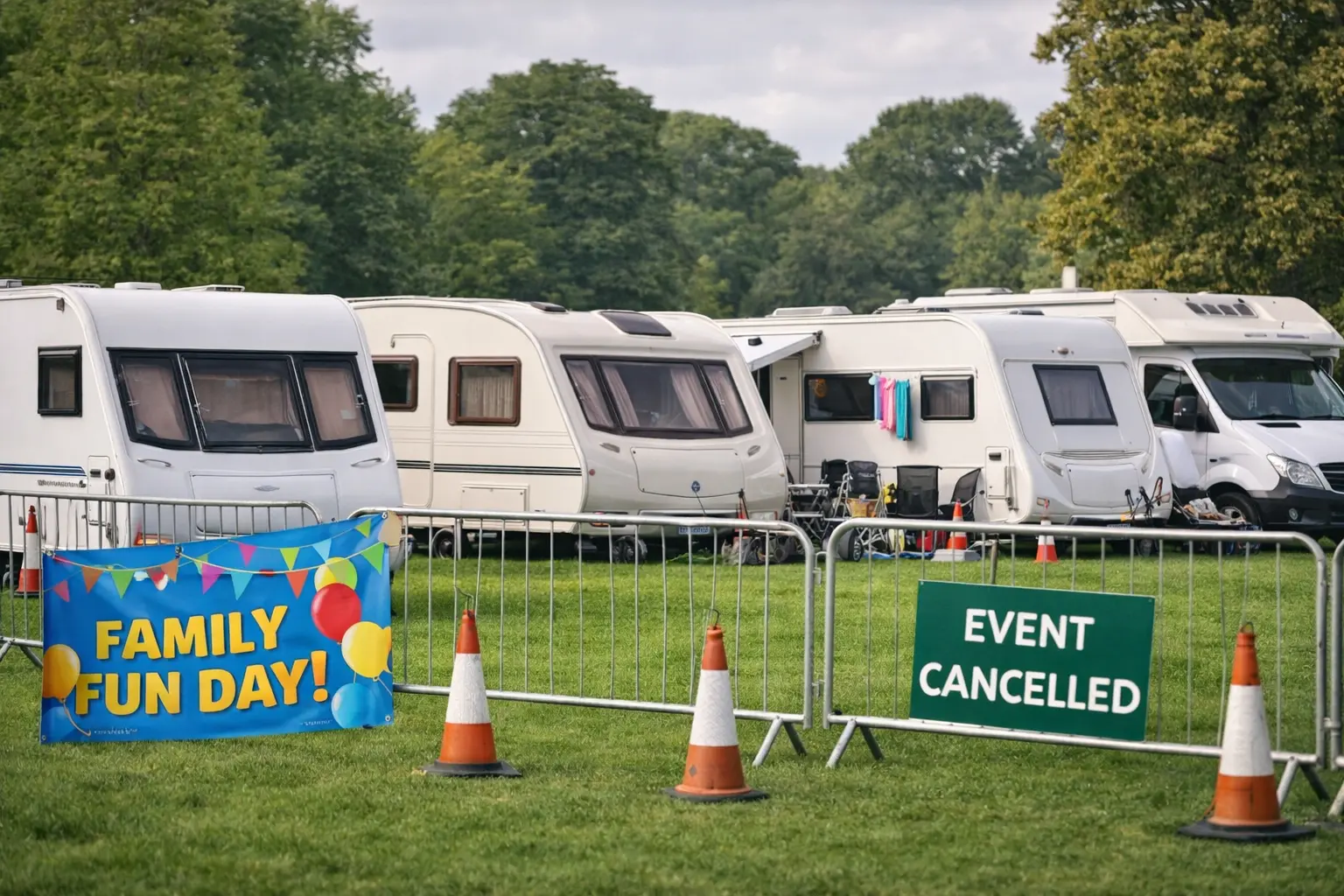
What was meant to be a cheerful day of family entertainment at Fernbrook Family Park turned into an unexpected disruption when a convoy of caravans arrived early in the morning and set up camp in the park’s parking area. The sudden presence of the Traveller group led to the cancellation of the much-anticipated Summer Fun Day, leaving families and event organizers scrambling for answers.
The incident has sparked broader conversations about how public spaces are used, the ongoing shortage of designated sites for Traveller communities, and the challenges local authorities face in balancing community needs.
A Quiet Arrival That Changed the Day
The first signs of change appeared shortly after sunrise. Dog walkers and early visitors noticed caravans entering the park’s parking lot one by one. Within a few hours, more vehicles joined, forming a cluster across the gravel area that usually hosts family cars, vendor vans, and food trucks during events.
By mid-morning, it became clear the planned festivities could not go ahead. Organizers posted notices announcing the cancellation of the Summer Fun Day, which had promised activities such as bouncy castles, live performances, rides, and animal encounters.
Parents arriving with excited children were met with closed entrances and cancellation signs. Social media quickly filled with photos of empty stalls and disappointed families.
Yet alongside the frustration, the scene around the caravans reflected everyday life—folding chairs set up outside, laundry hanging to dry, and the smell of breakfast cooking.
Immediate Impact on the Event
The unexpected occupation of the park forced vendors and organizers to shut down the event before it began.
Several immediate effects were noticeable:
-
Event stalls remained unused, with vendors packing up their equipment.
-
Rides and entertainment activities were cancelled, leaving empty spaces where attractions had been planned.
-
Food trucks stayed idle, with no customers to serve.
What had been planned as a lively gathering for families quickly turned into a quiet, uncertain atmosphere as residents gathered nearby to watch events unfold.
Understanding the Traveller Community
Traveller communities have a long-standing nomadic tradition. Many families travel from place to place, often staying temporarily in open areas while moving between locations.
However, a lack of designated transit sites or official camping areas often forces these groups to stop in public spaces such as fields, parking lots, or parks.
In the case of Fernbrook Family Park, the site likely appeared attractive because it offered open space as well as basic amenities such as water access and nearby restrooms.
For many Traveller families, these stops are short-term solutions while they search for the next available location.
Daily Life Inside the Encampment
Within the semi-circle of caravans, life continued much like it would in any small community.
Children rode scooters around the open areas, while adults prepared meals and discussed future travel plans. An elderly woman sat outside with tea while watching grandchildren play nearby.
Some members of the group explained that recent evictions from other temporary sites had left them with limited options, pushing them to look for places where they could stop safely for a short period.
Public parks sometimes become these temporary solutions, even though they are not designed for overnight stays.
Local Reactions: Frustration and Understanding
The sudden cancellation of the family event left many residents disappointed. Some had been looking forward to activities, food stalls, and entertainment that had been advertised for weeks.
Local vendors also faced losses after preparing goods for the event.
However, reactions were mixed. While some residents expressed frustration, others acknowledged the larger issue of insufficient designated sites for Traveller communities.
One regular visitor commented that plans for an official council site had been discussed for years but had not yet materialized.
Park staff and local authorities monitored the situation calmly, setting up barriers and beginning discussions with the group rather than escalating tensions.
How the Day Unfolded
The events at Fernbrook Family Park followed a clear progression throughout the day:
7:00–9:00 AM: Caravans arrive quietly, noticed by early visitors.
9:00–11:00 AM: Event organizers announce the cancellation and social media reactions spread.
11:00 AM–2:00 PM: Local residents gather while Traveller families settle into routine activities.
2:00–5:00 PM: Council officials begin negotiations and assess the situation.
After 5:00 PM: The atmosphere becomes calmer as crowds disperse.
Unexpected Moments of Connection
Despite the tension surrounding the cancellation, there were moments where the situation felt less confrontational.
In the afternoon, Traveller children began playing football near the playground. Some local children joined the game, turning the space into an informal meeting ground.
While adults kept their distance, the children’s spontaneous interaction showed that shared spaces can sometimes create unexpected connections.
Police and local officials maintained a low-profile presence, focusing on communication rather than confrontation.
A Larger Issue: Lack of Designated Sites
Events like this highlight a recurring challenge for many communities. Without enough official transit sites or camping areas, Traveller groups often have limited options for temporary stops.
As a result, public spaces such as parks and parking areas sometimes become unintended campsites.
This creates tension between community events and the basic need for safe places to stay.
Looking Ahead: Finding Long-Term Solutions
Once the Traveller group eventually leaves, Fernbrook Family Park will likely return to normal operations. Events will be rescheduled, and the park will again host families, picnics, and celebrations.
However, the situation raises important questions about how public spaces should be managed.
Possible solutions include:
-
Developing more designated transit sites for Traveller communities
-
Improving communication between councils and traveling groups
-
Creating clearer policies for temporary stays
-
Encouraging dialogue between residents and nomadic communities
By addressing these issues, local governments may be able to prevent similar disruptions while ensuring fair access to public spaces.
Frequently Asked Questions
Why was the family event cancelled?
The Summer Fun Day at Fernbrook Family Park was cancelled after a group of Travellers set up caravans in key areas of the park, making it impossible for organizers to safely run the event.
Are Travellers allowed to camp in public parks?
Public parks are generally not designated camping areas. Authorities often balance enforcement with humanitarian considerations when dealing with unauthorized encampments.
How long do Traveller groups usually stay?
Stays can range from a few days to several weeks, depending on negotiations with local authorities and available alternatives.
What options exist for Traveller communities?
Designated transit sites and official pitches provide safer alternatives, but many areas have limited availability.
How can communities manage these situations better?
Constructive dialogue, clear policies, and increased availability of authorized sites can help reduce conflicts and improve understanding between communities.